# Set Intermediate Waypoints

{% hint style="info" %}
Waypoints are pre-set GPS coordinates that guide the aircraft along a specific path. Each waypoint includes information like **altitude**, **action** **commands**, and other **flight parameters**. As the DeltaQuad Evo flies autonomously, it follows these waypoints in sequence, adjusting its position to stay on course. This allows for precise navigation during missions such as surveying, mapping, inspection&#x73;**,** and cargo drops.
{% endhint %}

1. After the **Mission Start Action** has been planned, **Waypoints** can be added by clicking anywhere on the map. Select the **Waypoint Tool** from the **Plan Tools** on the left side of the screen.&#x20;

<figure><img src="https://content.gitbook.com/content/KBsYYYTTfla4fXzYBpU6/blobs/ws3I9tgfPUVTnOGvLKbd/WP%20Tool.webp" alt="" width="194"><figcaption></figcaption></figure>

2. Click anywhere on the map to designate a location for the waypoint.

<figure><img src="https://content.gitbook.com/content/KBsYYYTTfla4fXzYBpU6/blobs/bp4sl2UrpNhYdpFNtZ9m/Setting%20waypoints%201.webp" alt=""><figcaption></figcaption></figure>

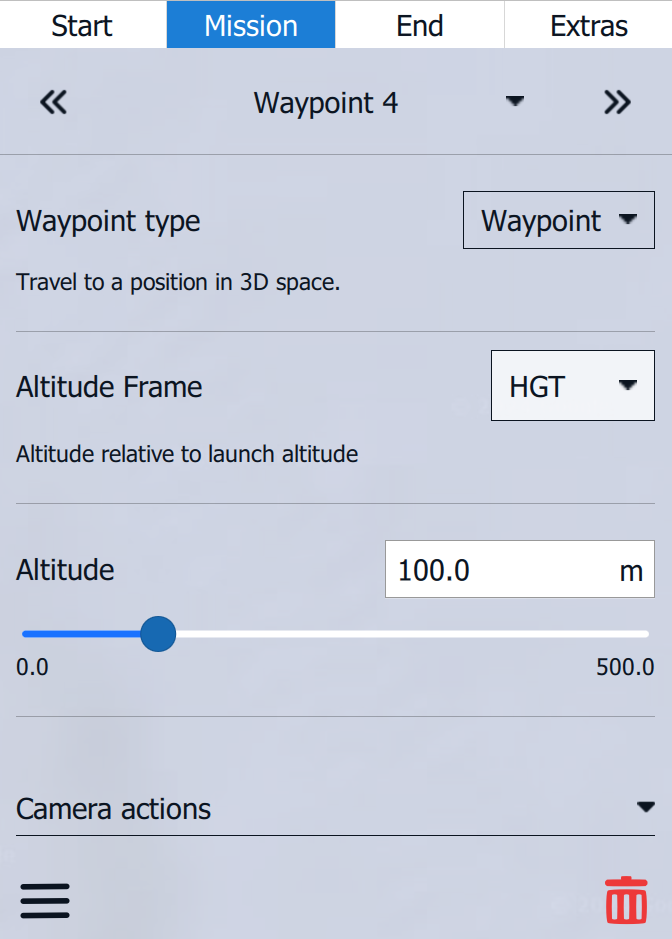
3. After placing the **Waypoint** on the map, the **Mission** tab in the **Mission Editor** on the right side of the screen will open.

<figure><img src="https://content.gitbook.com/content/KBsYYYTTfla4fXzYBpU6/blobs/JhfQyhISPip1xl3G0RJz/Setting%20waypoints%202.webp" alt="" width="336"><figcaption></figcaption></figure>

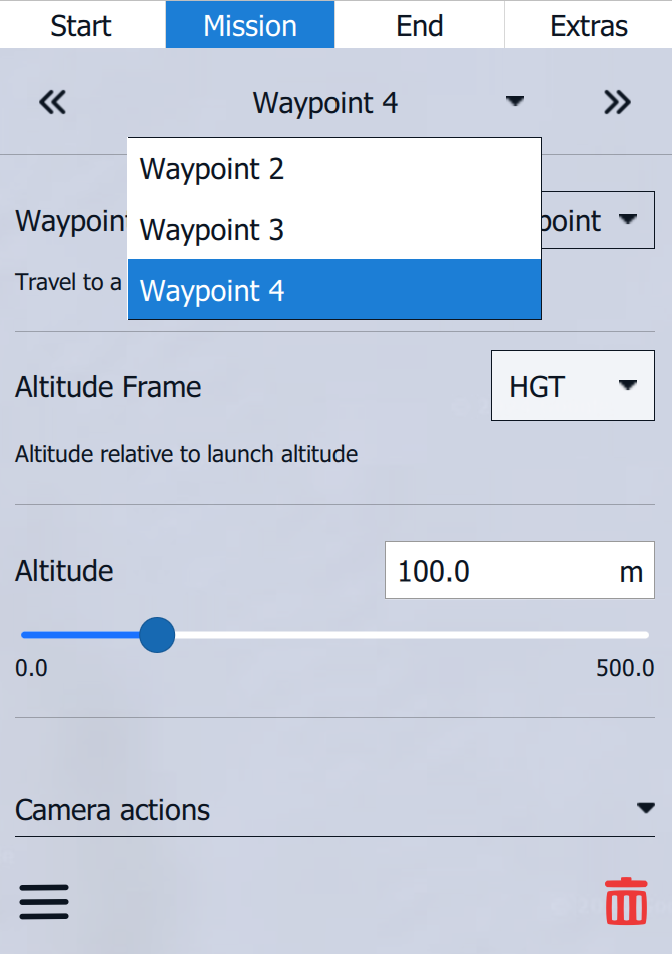
4. When clicking on the waypoint number, the **Waypoint** **Summary** opens, where all planned waypoints, survey and corridor items, and custom actions are available. Click on any of them to jump to the selected item.

<figure><img src="https://content.gitbook.com/content/KBsYYYTTfla4fXzYBpU6/blobs/3nIR9lt3bmhGQS15AxGY/Waypoint%20summary.webp" alt="" width="336"><figcaption></figcaption></figure>

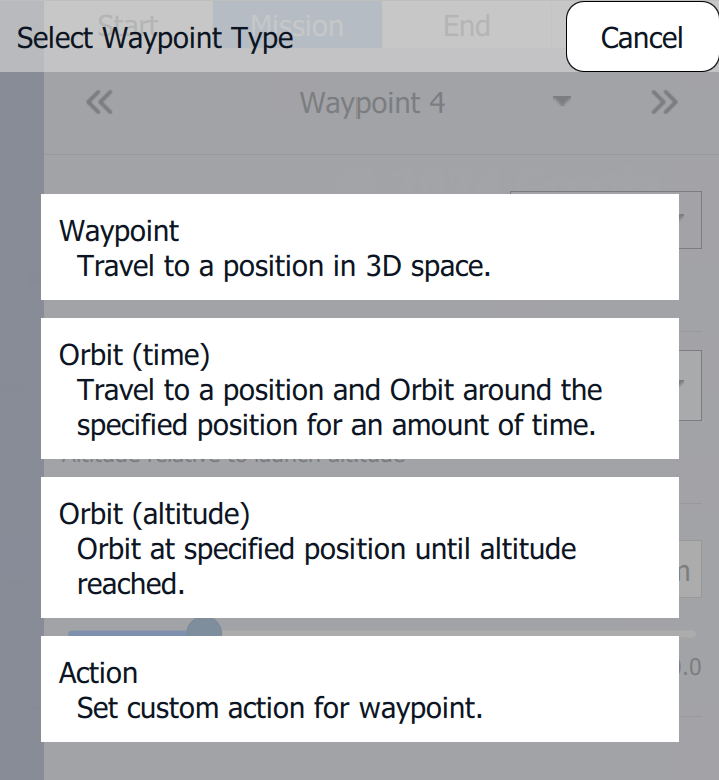
5. **Waypoint type** changes the waypoint command. The following **Waypoint Commands** are available in **AMC's Normal Mode**.

<figure><img src="https://content.gitbook.com/content/KBsYYYTTfla4fXzYBpU6/blobs/Rz9fHIWK4WFZkY0xBPGD/Waypoint%20Type.webp" alt="" width="360"><figcaption></figcaption></figure>

#### Waypoint

The vehicle will fly to the **User-specified Location** and A**ltitude**, and once there, continue on to the next mission item. If there is no mission item after the waypoint, the vehicle will orbit in place at the waypoint’s location.

#### Orbit (time)

The vehicle will travel to the **User-defined Orbit Location** and **Altitude**. Once it arrives, the vehicle will **Orbit** the area until the specified orbit time expires, then it will proceed to the next mission item.

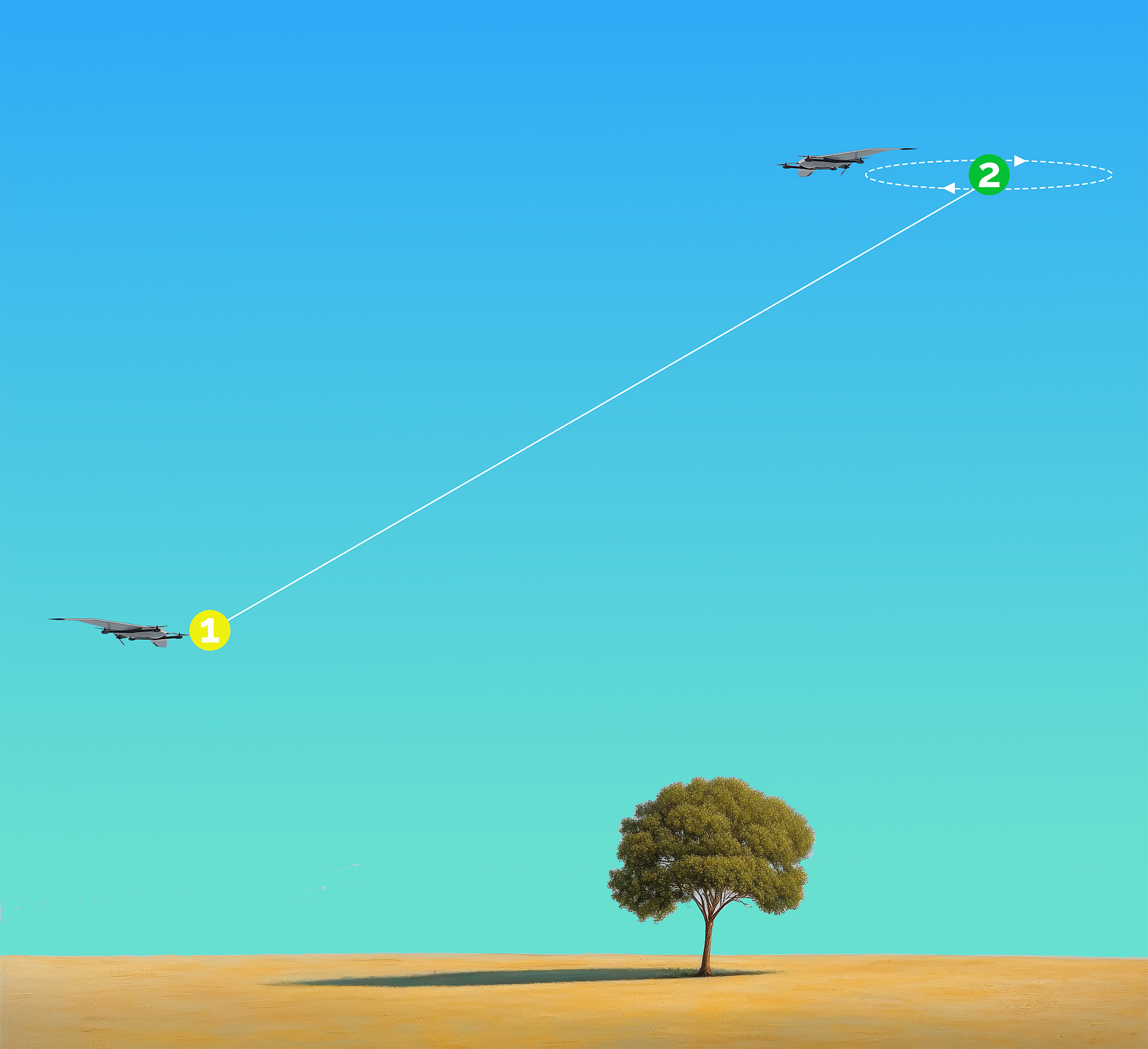
If the altitude of an **Orbit (time)** or **Waypoint** mission item is different from the vehicle’s current altitude, the vehicle will **fly directly to the mission item in a straight line**. It will not first ascend or descend to match the mission item’s altitude before proceeding forward.

<figure><img src="https://content.gitbook.com/content/KBsYYYTTfla4fXzYBpU6/blobs/FPiBJwv8uuWdJsmWVO4a/Orbit%20Time.webp" alt="" width="563"><figcaption></figcaption></figure>

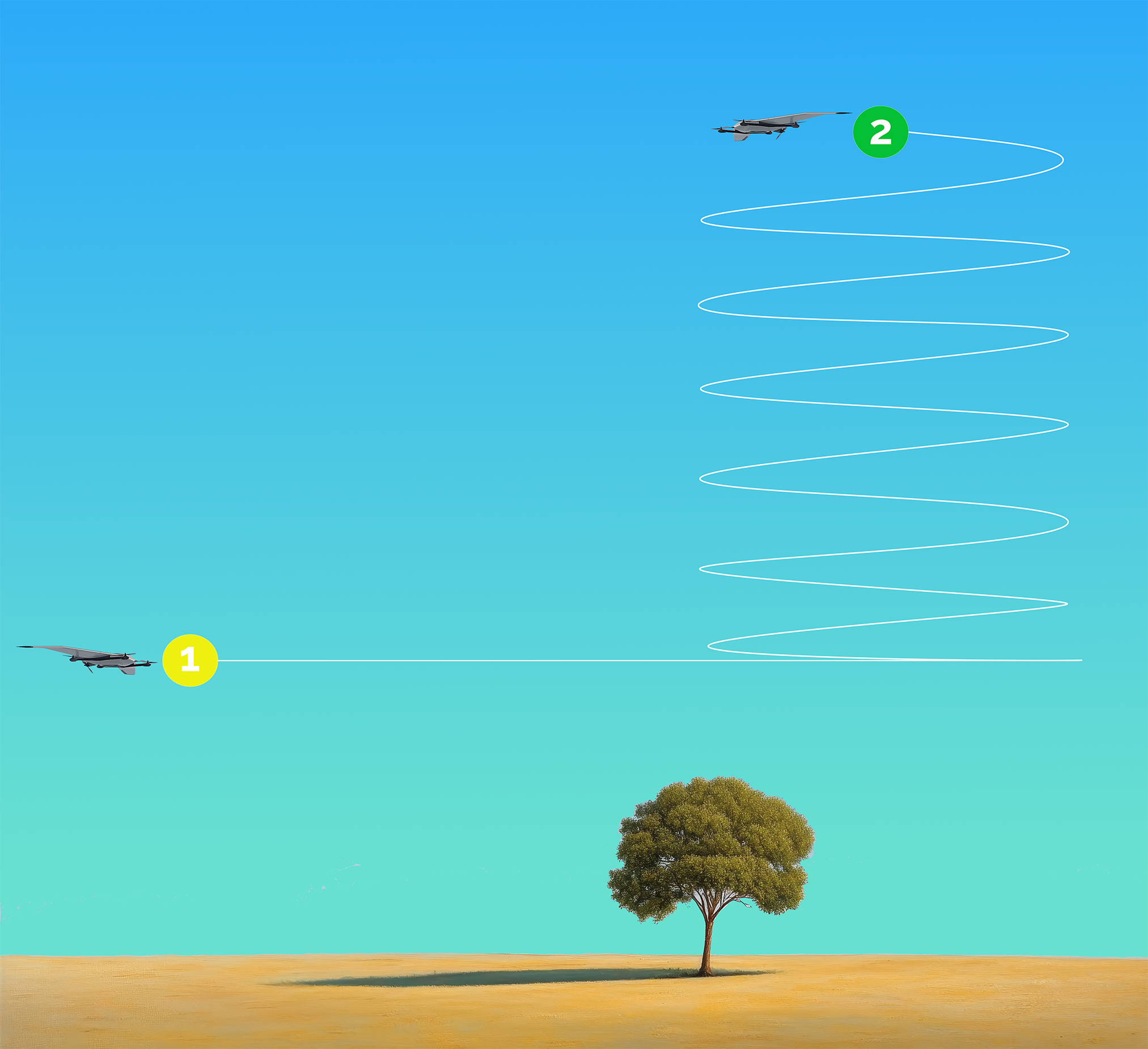
If the vehicle’s climb or descent rate isn’t sufficient to reach the destination mission item on a direct path, it will **orbit at the mission item’s horizontal position** until it completes the climb or descent to the required altitude.

<figure><img src="https://content.gitbook.com/content/KBsYYYTTfla4fXzYBpU6/blobs/k1IIpo2BYMW77BJgX6Kl/Orbit%20Time%20(altitude).webp" alt="" width="563"><figcaption></figcaption></figure>

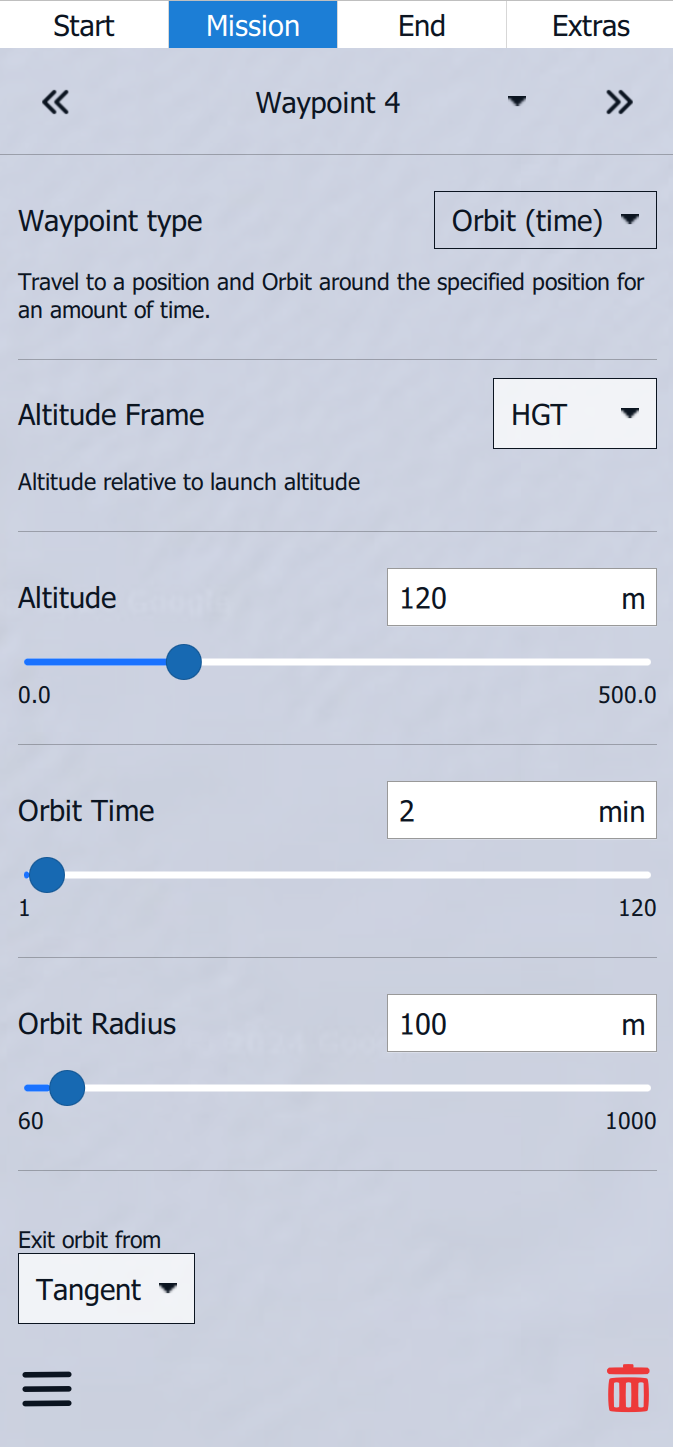
<figure><img src="https://content.gitbook.com/content/KBsYYYTTfla4fXzYBpU6/blobs/tnCabcYyRJCMkj4xHpxJ/Orbit%20Time%20Menu.webp" alt="" width="337"><figcaption></figcaption></figure>

**Orbit Time** defines the duration of the **Orbit Command**, while **Orbit Radius** determines the size of the **Orbit**. **Exit orbit from** provides two choices for where within the **Orbit** the vehicle will exit.

#### Orbit (altitude)

The vehicle will fly to the **Orbit (altitude)** point at its current mission altitude. Only after reaching the horizontal location of the Orbit (altitude) will the vehicle begin **climbing** or **descending** to the **user-specified altitude**. This behavior differs from that of the other mission items described above. When using Orbit (altitude), be especially cautious about **terrain collisions**.

<figure><img src="https://content.gitbook.com/content/KBsYYYTTfla4fXzYBpU6/blobs/sXtcZkOqSb8mFDC4jPHt/Orbit%20Altitude.webp" alt="" width="563"><figcaption></figcaption></figure>

**Orbit (altitude)** is suitable for reaching a specific altitude before the flight path continues. This is necessary to avoid terrain collisions if the vehicle cannot achieve the required climb or descent rate directly on route.

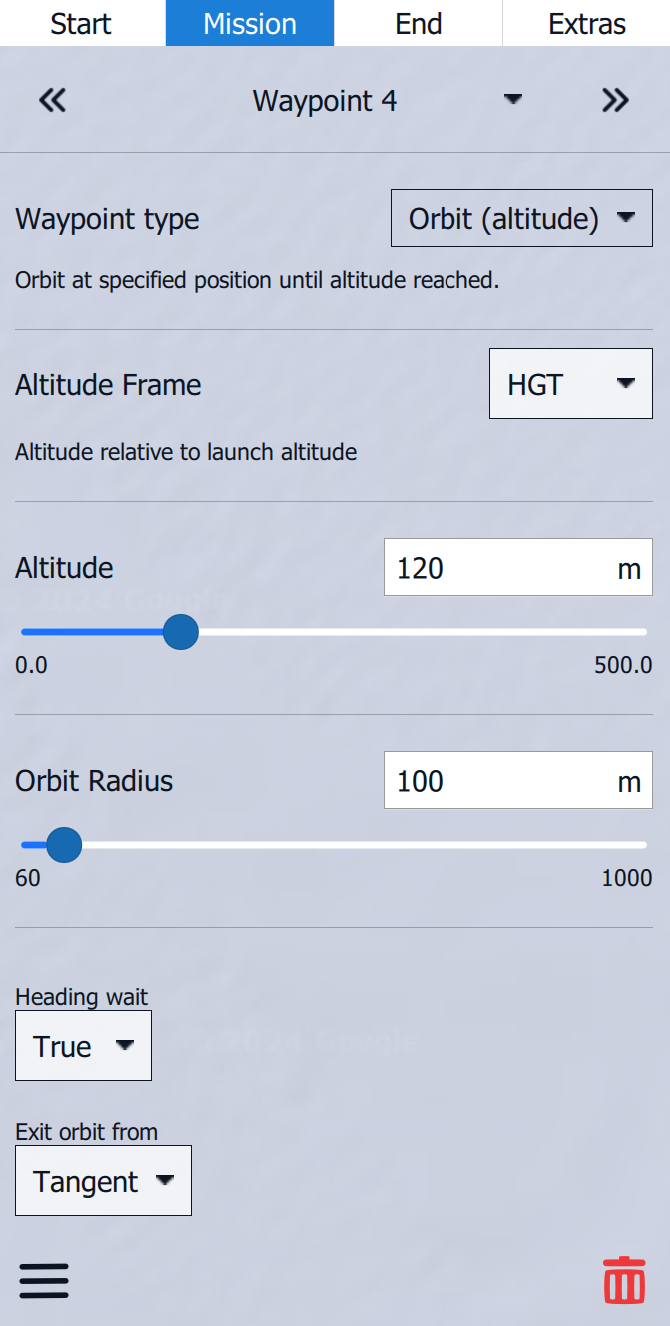
<figure><img src="https://content.gitbook.com/content/KBsYYYTTfla4fXzYBpU6/blobs/WFO0ukknWXccPf0hPABT/Orbit%20Altitude%20menu.webp" alt="" width="335"><figcaption></figcaption></figure>

**Altitude** defines the final height of the **Orbit Command**, while **Orbit Radius** determines the size of the **Orbit**. **Exit orbit from** provides two choices for where within the **Orbit** the vehicle will exit.

#### Action

A waypoint that becomes a **Custom Action** attaches itself to the former **Waypoint**. This **Custom Action** can be used, for example, to enable or disable the **Stealth Switch** or to plan a **Cargo Drop**. The **Stealth Switch** and the **Cargo Drop** will be discussed in a later chapter in this manual.

6. The **Altitude Frame** is set to **HGT** by default. For standard operation, it is recommended to leave this setting as it is.

<table><thead><tr><th width="207">Symbol</th><th>Meaning</th><th data-hidden></th></tr></thead><tbody><tr><td>HGT</td><td>Height (Heights are referenced to the takeoff location)</td><td></td></tr><tr><td>MSL</td><td>Mean Sea Level (Altitude Above Mean Sea Leve)</td><td></td></tr><tr><td>AGL</td><td>Above Ground Level (Altitude Above Ground Level)</td><td></td></tr></tbody></table>

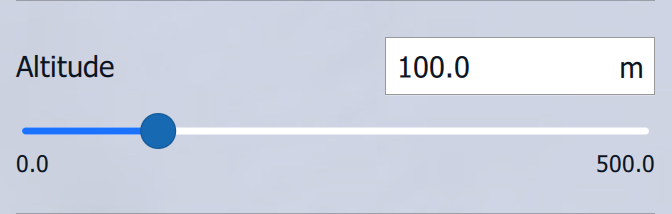
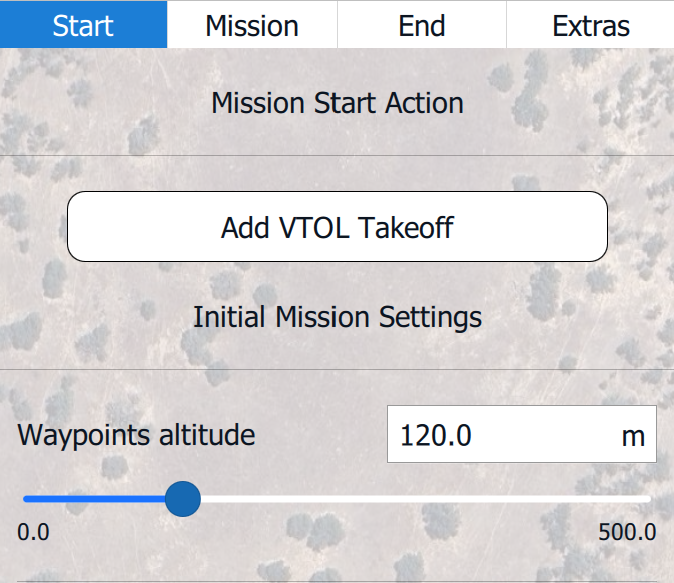
7. Set the **Altitude** of the **Waypoint** using the **Altitude Slider** or by typing in the desired value. The **Default Waypoints altitude** is set in the **Mission Start Action** and can be adjusted for each **Waypoint** individually. The following Waypoint automatically inherits the altitude of the previous Waypoint.

<figure><img src="https://content.gitbook.com/content/KBsYYYTTfla4fXzYBpU6/blobs/GblDw5BwHeeZeBpBzzUP/Waypoint%20Altitude.webp" alt="" width="336"><figcaption></figcaption></figure>

<figure><img src="https://content.gitbook.com/content/KBsYYYTTfla4fXzYBpU6/blobs/inn3s0OFq2l2VJ7FCCKD/Mission%20Start%20Action%20Tab.webp" alt="" width="337"><figcaption></figcaption></figure>

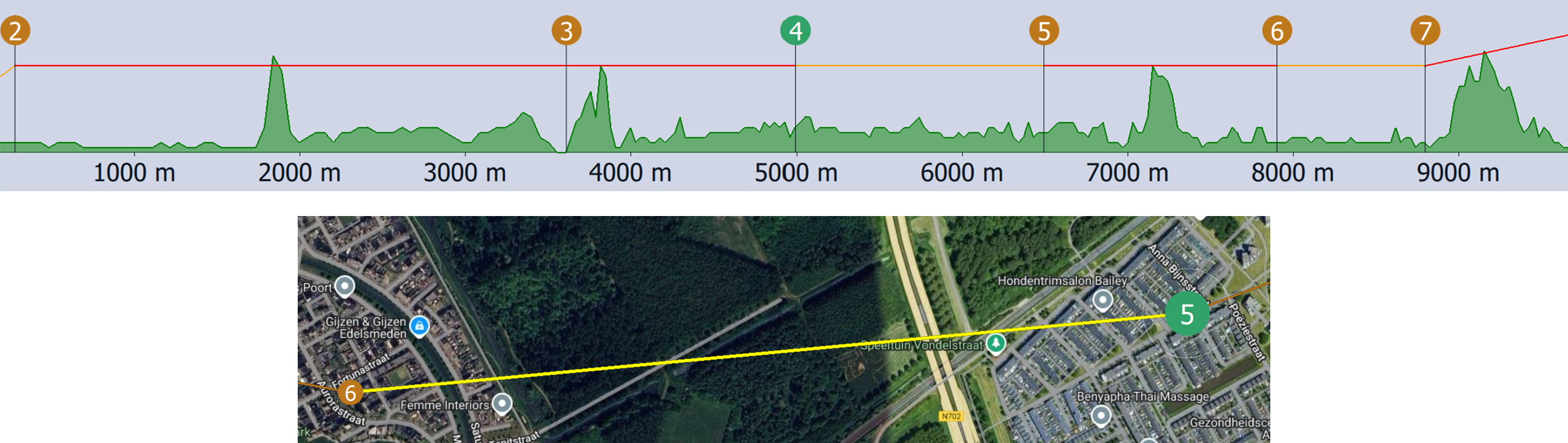
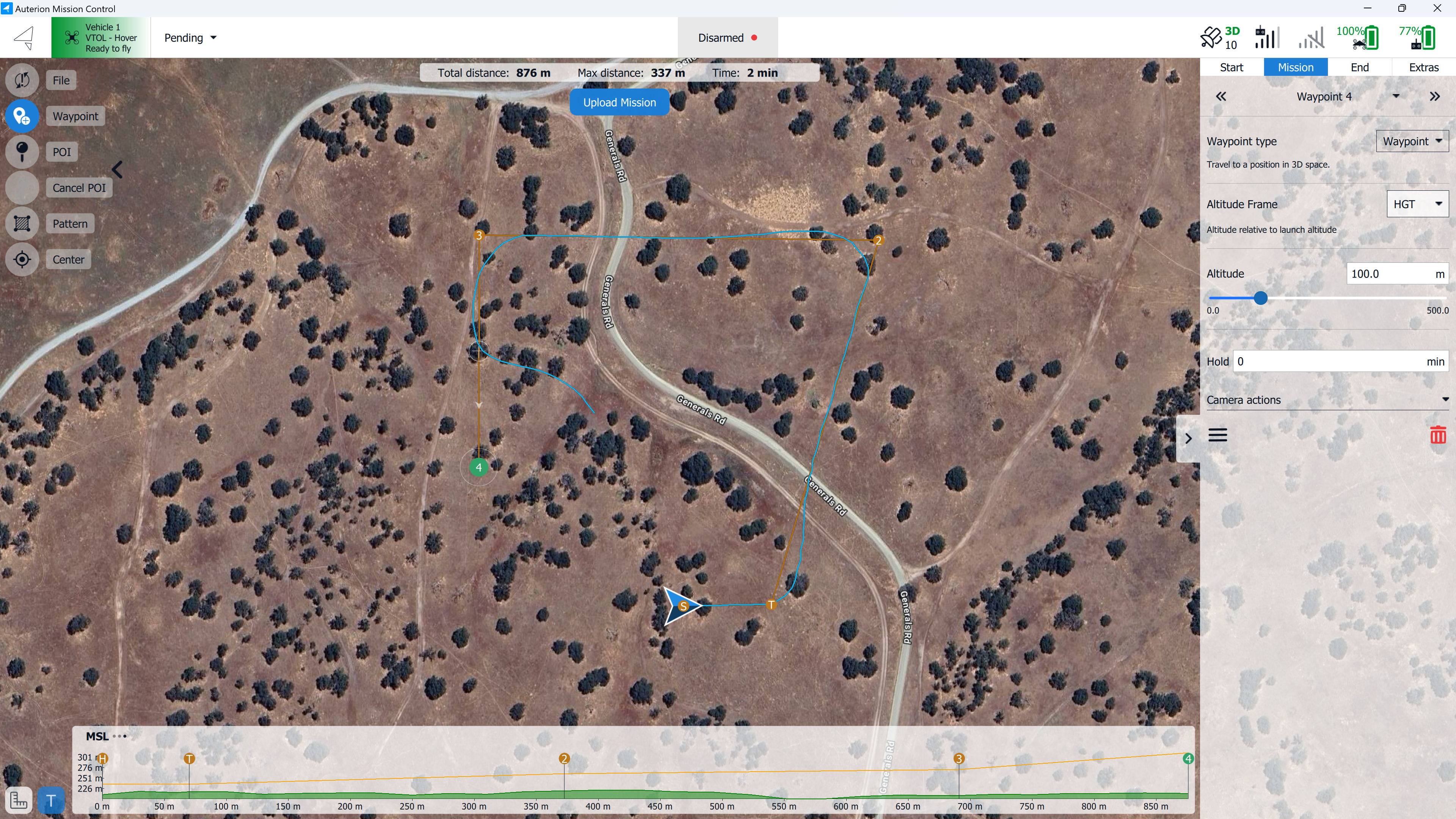
8. Always verify ground elevation using the **Terrain Altitude Indicator**. A ground collision is indicated when the **orange line turns red** in the Terrain Altitude Indicator and is also visible on the map.

<figure><img src="https://content.gitbook.com/content/KBsYYYTTfla4fXzYBpU6/blobs/jKtPBXkPtqtghtCmYXG0/Terrain%20Collision.png" alt=""><figcaption></figcaption></figure>

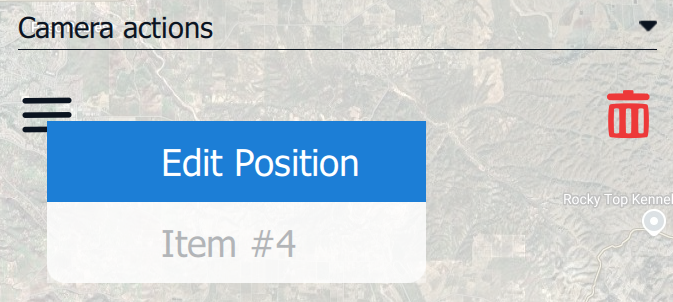
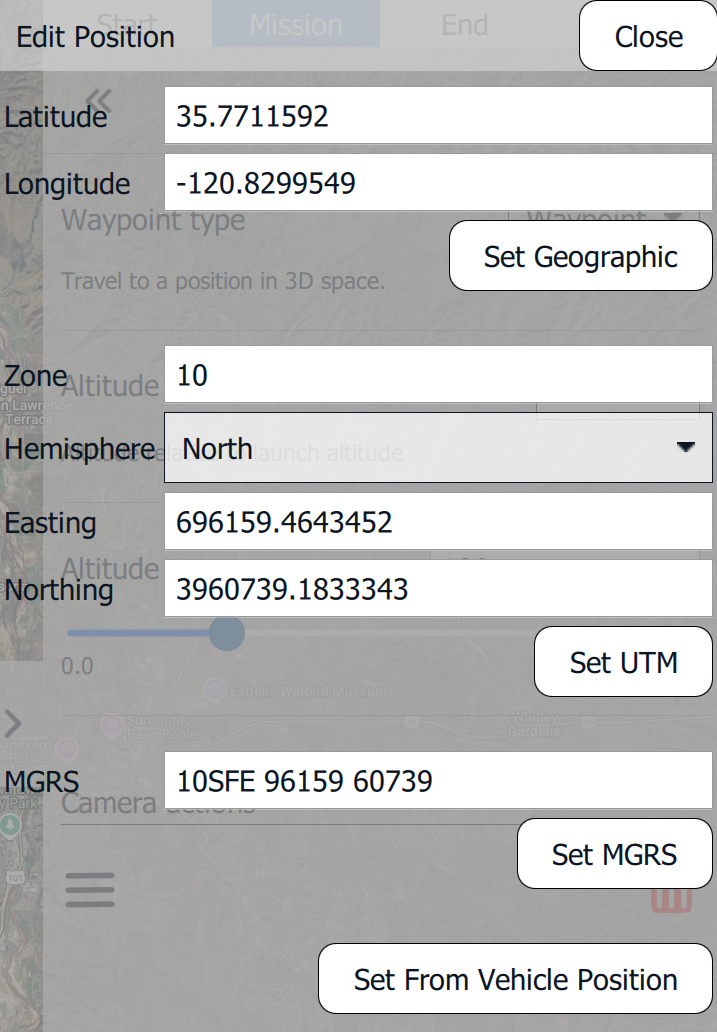
9. The **Waypoint** can be deleted by clicking the **Red Trash Bin** in the lower right corner of the **Mission Editor** window. By clicking the **Three Dashes** in the lower left corner of the Mission Editor window, **Geographic Coordinates** can be inserted for the Waypoint.  Insert the values for the coordinate system of your choice and click **Set** to confirm the coordinates. **Set From Vehicle Position** will set the **Waypoint** to the current vehicle position.

<figure><img src="https://content.gitbook.com/content/KBsYYYTTfla4fXzYBpU6/blobs/pMBlu1eB2W3fIjVti4Y7/WP%20menu%20bottom.webp" alt="" width="337"><figcaption></figcaption></figure>

<figure><img src="https://content.gitbook.com/content/KBsYYYTTfla4fXzYBpU6/blobs/u767i5rIE8ObrSgmRCNB/Geo%20coordinates.webp" alt="" width="359"><figcaption></figcaption></figure>

## Point of Interest (POI)

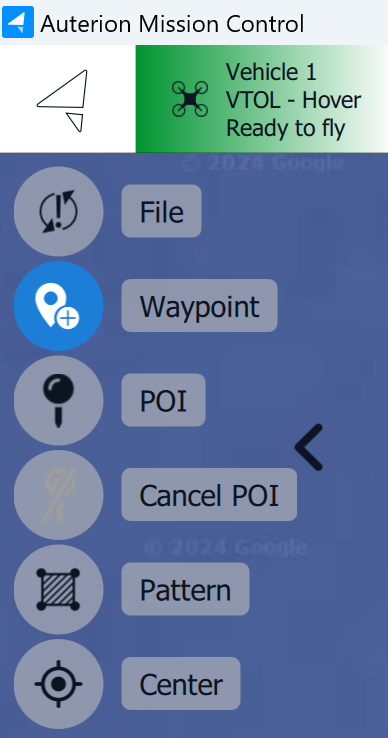
1. Select the **POI Tool** from the **Plan** **Tools** on the left side of the screen. Click on the map where you want to set the **POI location**. The **camera gimbal** will automatically point towards the most recently created **POI**.

<figure><img src="https://content.gitbook.com/content/KBsYYYTTfla4fXzYBpU6/blobs/D04qzV5ROnCrlN73J3hX/image.png" alt=""><figcaption></figcaption></figure>

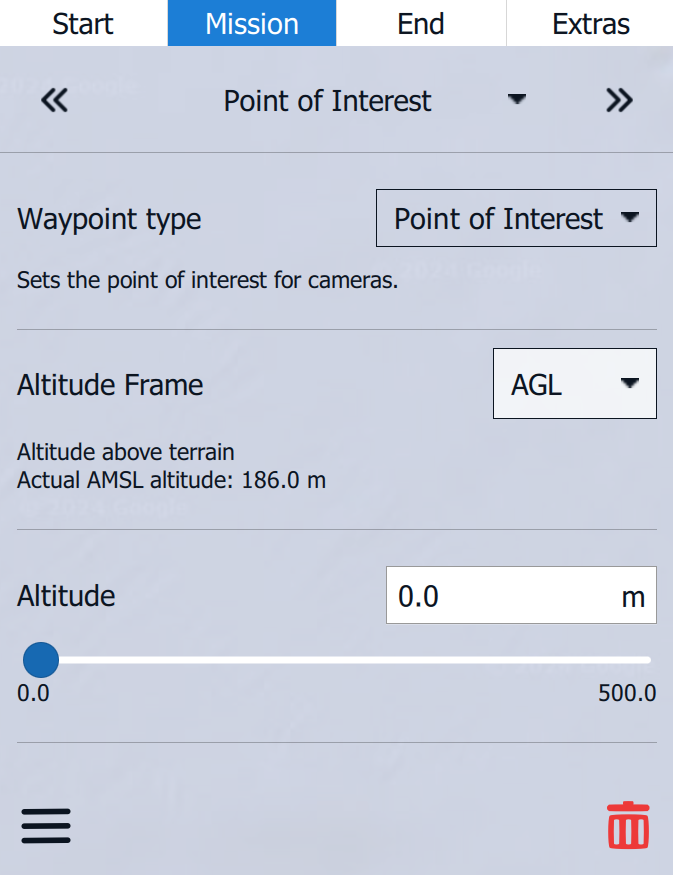
2. In the **Mission Editor**, located on the right side of the screen, the **POI menu** displays the following settings.

<figure><img src="https://content.gitbook.com/content/KBsYYYTTfla4fXzYBpU6/blobs/6CypdZcrq137x5osaa5C/POI%20menu.webp" alt="" width="337"><figcaption></figcaption></figure>

3. For the POI the **Altitude Frame** is set to **AGL** by default. It is recommended to leave this setting as it is.

<table><thead><tr><th width="207">Symbol</th><th>Meaning</th><th data-hidden></th></tr></thead><tbody><tr><td>HGT</td><td>Height (Heights are referenced to the takeoff location)</td><td></td></tr><tr><td>MSL</td><td>Mean Sea Level (Altitude Above Mean Sea Leve)</td><td></td></tr><tr><td>AGL</td><td>Above Ground Level (Altitude Above Ground Level)</td><td></td></tr></tbody></table>

4. The altitude of the **POI** can be set using the **Altitude Slider**. In most cases, it is recommended to leave this value at 0 m.
5. The **POI** can be deleted by clicking the **Red Trash Bin** in the lower right corner of the **Mission Editor** window. By clicking the **Three Dashes** in the lower left corner of the **Mission Editor** window, **Geographic Coordinates** can be inserted for the **POI**.  Insert the values for the coordinate system of your choice and click **Set** to confirm the coordinates. **Set From Vehicle Position** will set the **Waypoint** to the current vehicle position.
6. To cancel the **POI**, select the **Cancel POI** tool from the **Plan Tools**.

<figure><img src="https://content.gitbook.com/content/KBsYYYTTfla4fXzYBpU6/blobs/oUDYyaMhSy8PrYdyu0in/image.png" alt=""><figcaption></figcaption></figure>