> For the complete documentation index, see [llms.txt](https://docs.deltaquad.com/tac/llms.txt). Markdown versions of documentation pages are available by appending `.md` to page URLs; this page is available as [Markdown](https://docs.deltaquad.com/tac/flight/quick-takeoff/land-approach.md).
# Land Approach
This section outlines the steps involved in planning the Land Approach.
1. To plan a **Quick Takeoff**, the **DeltaQuad Evo** must be connected to the **GCS**.
2. Position the vehicle at the desired takeoff location.
3. Ensure the **nose** of the vehicle is **pointed into** the **wind**.
4. In the **Fly View**, click on the **Takeoff** command.
## Land Approach Settings
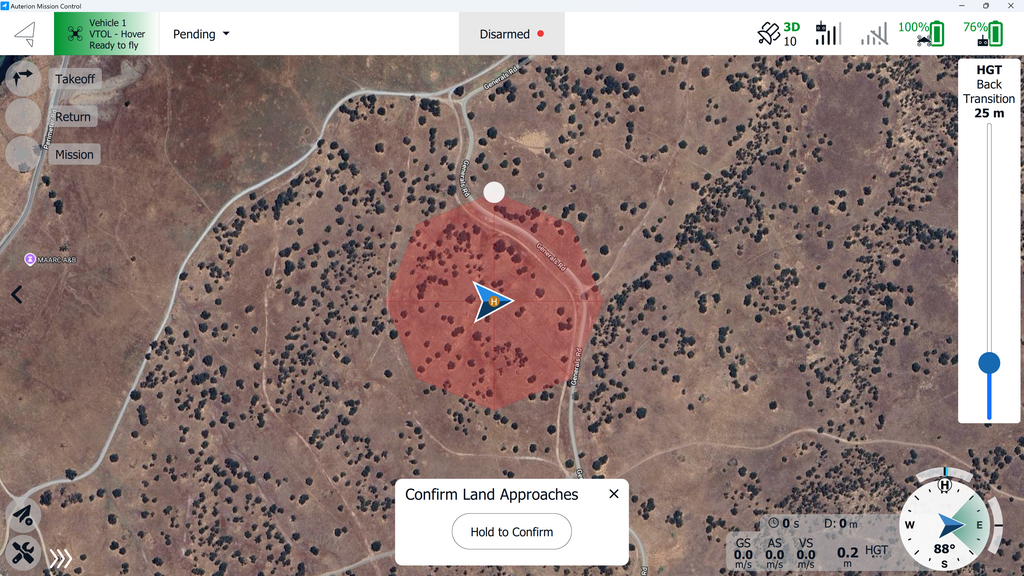
1. An **Octagon** is positioned around the vehicle, divided into 8 red sectors called **Pizza Slices**.
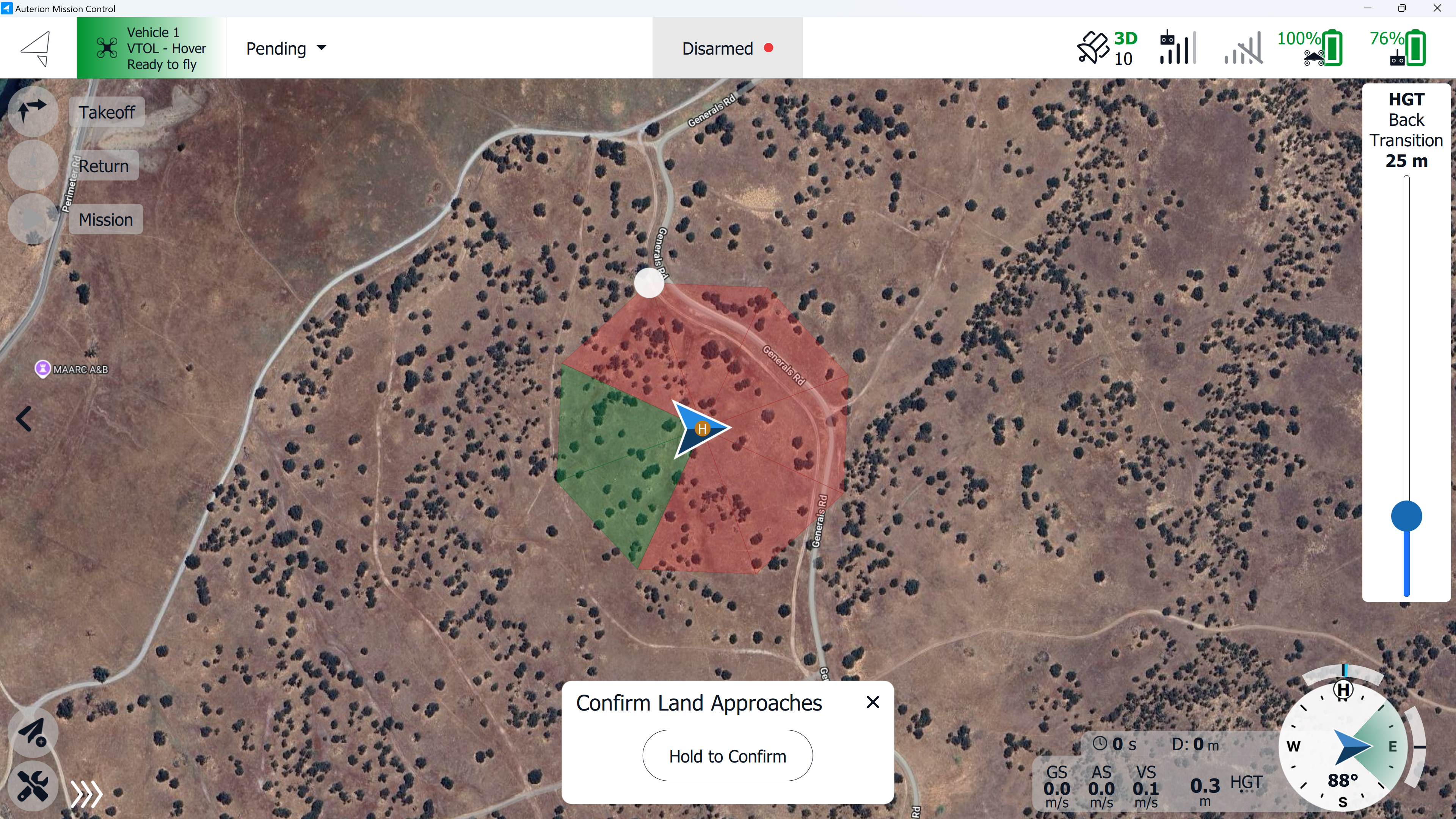
2. The first step is to assign the **sectors** where the vehicle can **loiter**, **transition**, and **land**. This is done by clicking on the relevant **sectors**. These sectors must be free of **obstacles**, and since the vehicle should take off and transition into the **wind**, **sectors** behind the vehicle should be selected. The vehicle will place the Loiter Down Orbit within the dedicated green area
3. Grab the **vertex** at the top of the **octagon** and move it around for more **granular control**.
{% hint style="warning" %}
The vehicle places the **Loiter Down Orbit** within the dedicated **Approach Zones (green)** so the vehicle can transition and land into the wind. If this is not possible, the vehicle will choose a **Loiter Down Orbit** as close as possible to this direction, given the limitations of the selected sectors.
{% endhint %}
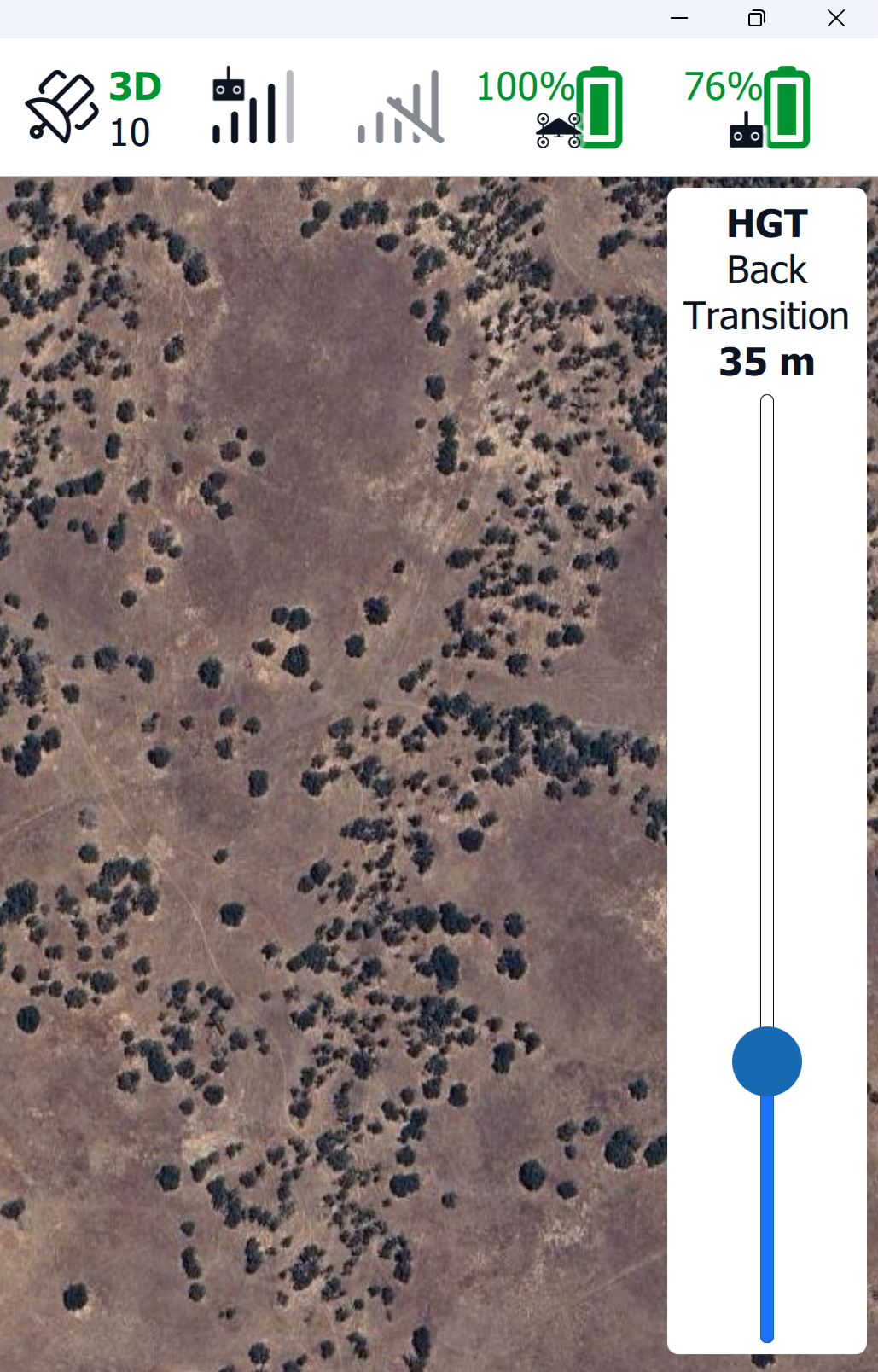
4. Set the altitude for the **Back Transition** using the **Altitude Slider** on the right side of the screen. The **Altitude Frame** is **HGT**, Height (Heights are referenced to the takeoff location).
{% hint style="warning" %}
The minimum **Back Transition/Landing Altitude** to which the vehicle descends must be set at least **25 meters** above the highest obstacles in the landing area. For example, if the tallest tree in the landing area is **10 meters** high, the **Landing Altitude** must be set to at least **35 meters**.
{% endhint %}
{% hint style="info" %}
When using the **Quick Takeoff**, only the **Orbit Land Pattern** is available as a landing option. A **Straight Land Pattern** is not available.
{% endhint %}
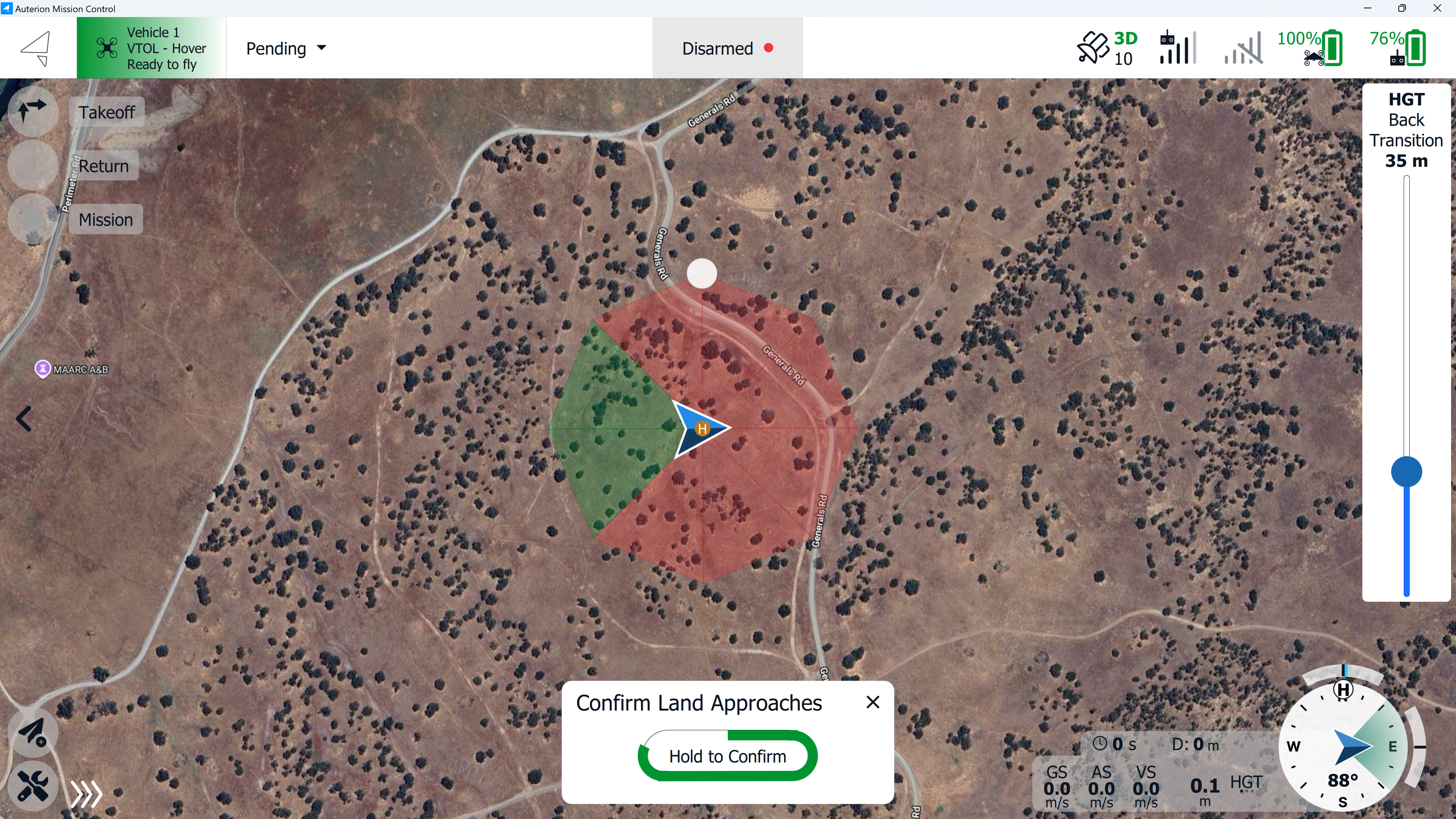
5. **Hold** **to Confirm** the settings for the **Land Approaches**.
---
# Agent Instructions
This documentation is published with GitBook. GitBook is the documentation platform designed so that both humans and AI agents can read, navigate, and reason over technical content effectively. Learn more at gitbook.com.
## Querying This Documentation
If you need additional information that is not directly available in this page, you can query the documentation dynamically by asking a question.
Perform an HTTP GET request on the current page URL with the `ask` query parameter, and the optional `goal` query parameter:
```
GET https://docs.deltaquad.com/tac/flight/quick-takeoff/land-approach.md?ask=&goal=
```
`ask` is the immediate question: it should be specific, self-contained, and written in natural language.
`goal` is optional and describes the broader end goal you are ultimately trying to accomplish on behalf of the user. GitBook uses it to tailor the answer towards what is most useful for that goal.
The response will contain a direct answer to the question and relevant excerpts and sources from the documentation.
Use this mechanism when the answer is not explicitly present in the current page, you need clarification or additional context, or you want to retrieve related documentation sections.